A five-book curriculum · by Ellison Bond

The working library for healthcare integration.

Written by a practitioner for practitioners. The HL7 Integration Series takes readers from "what is HL7?" through fluent v2 reading, working JavaScript, production routing patterns, and FHIR — one book at a time.

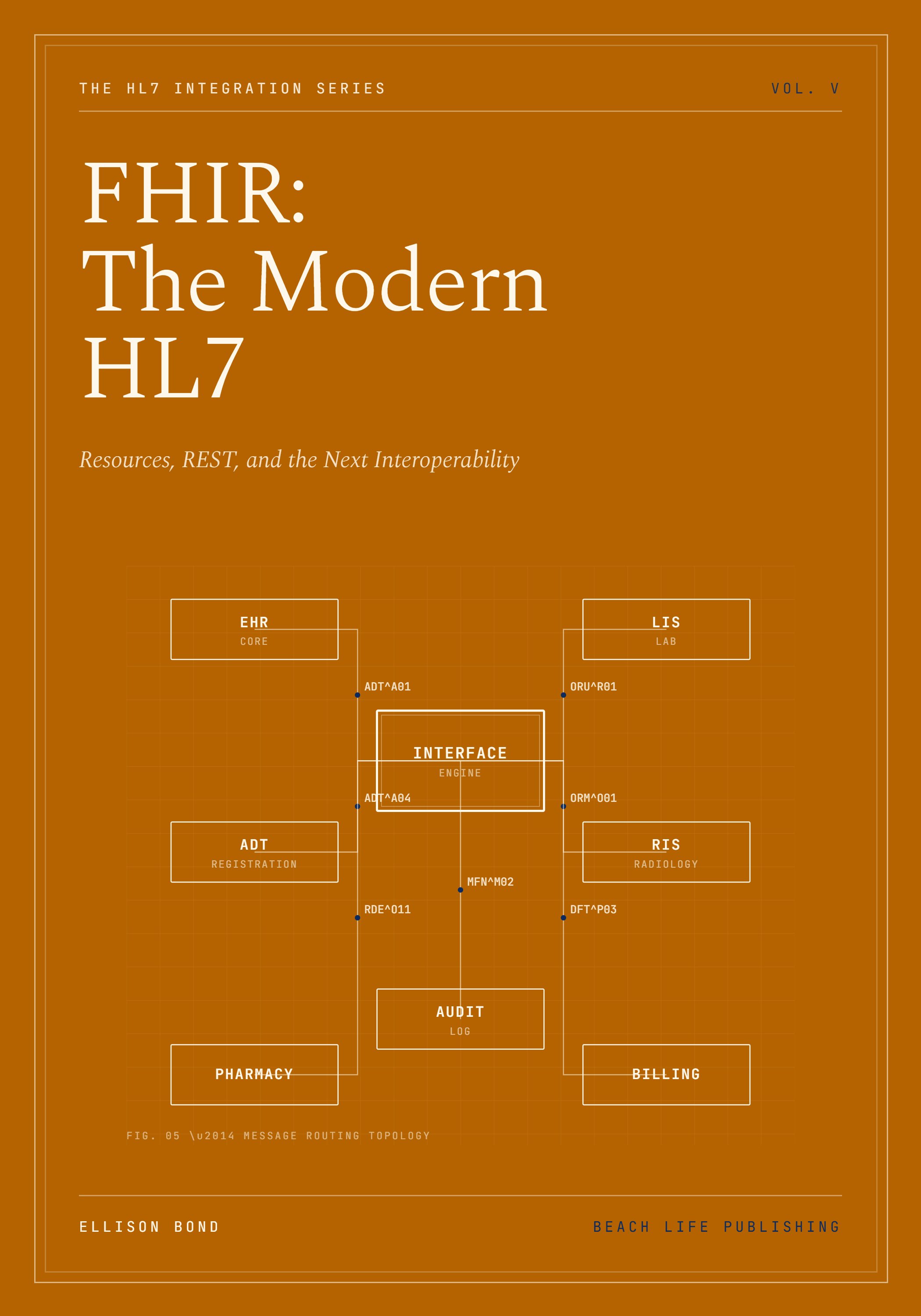
FHIR: The Modern HL7 — Volume V cover
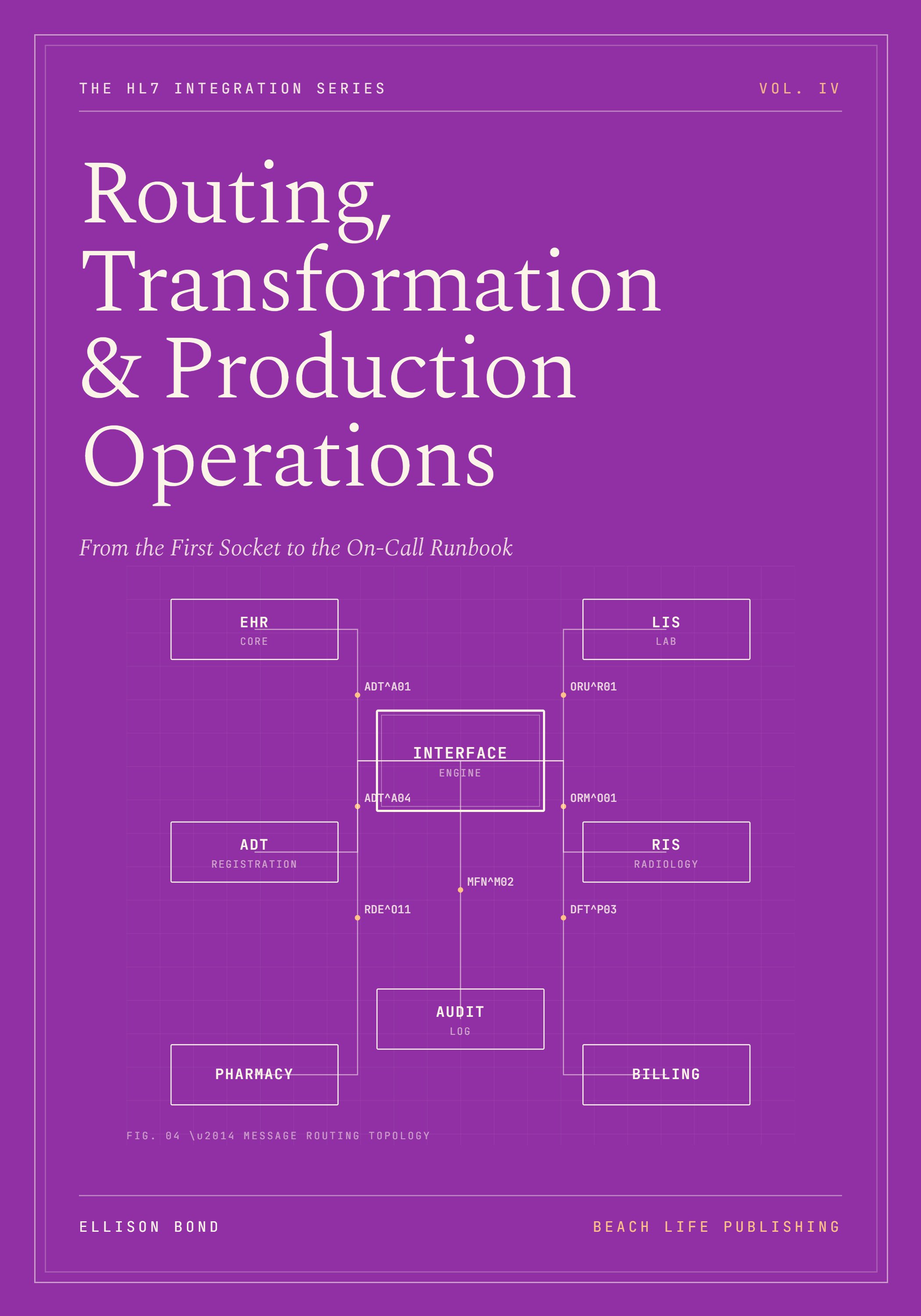
Routing, Transformation & Production Operations — Volume IV cover
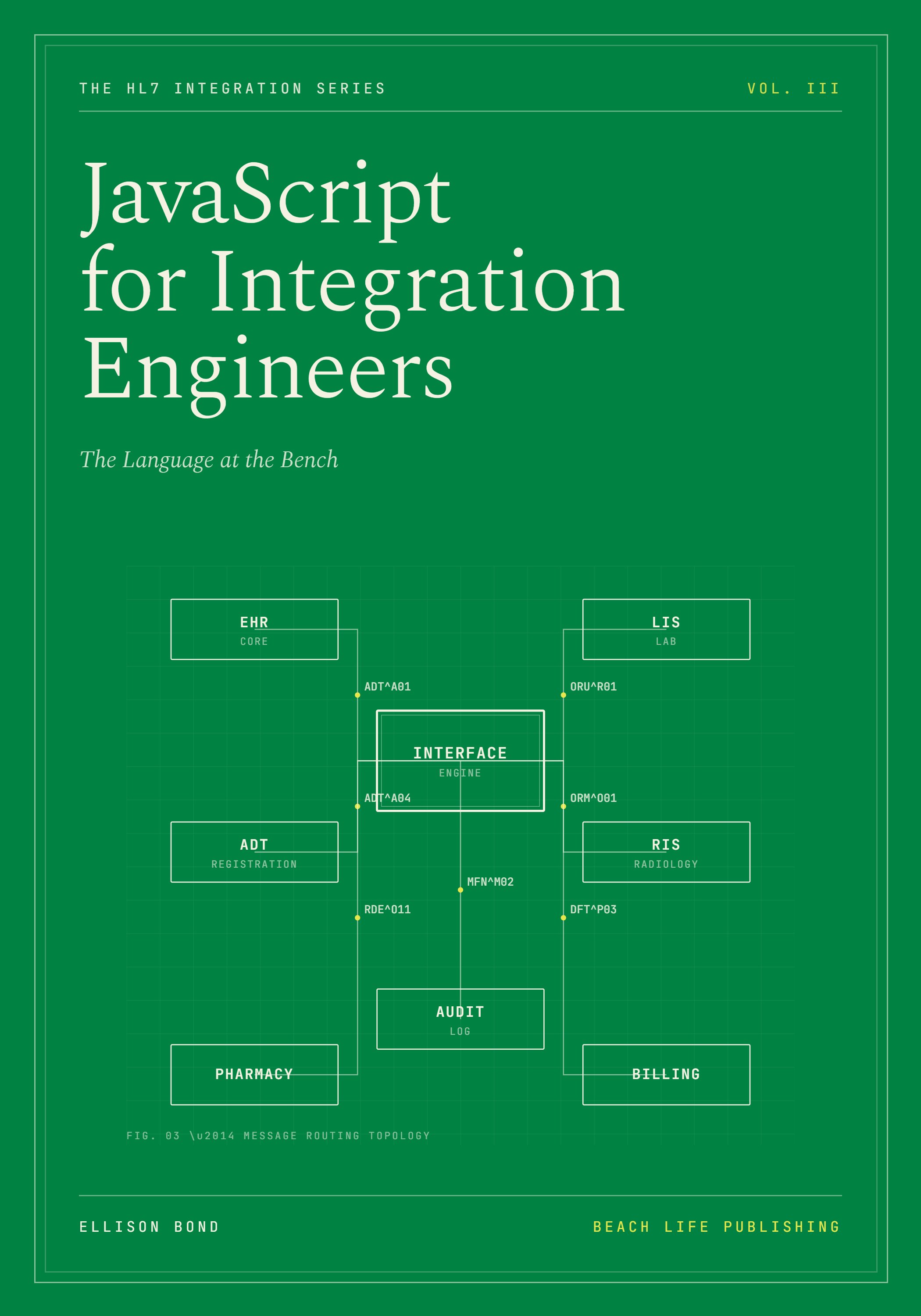
JavaScript for Integration Engineers — Volume III cover
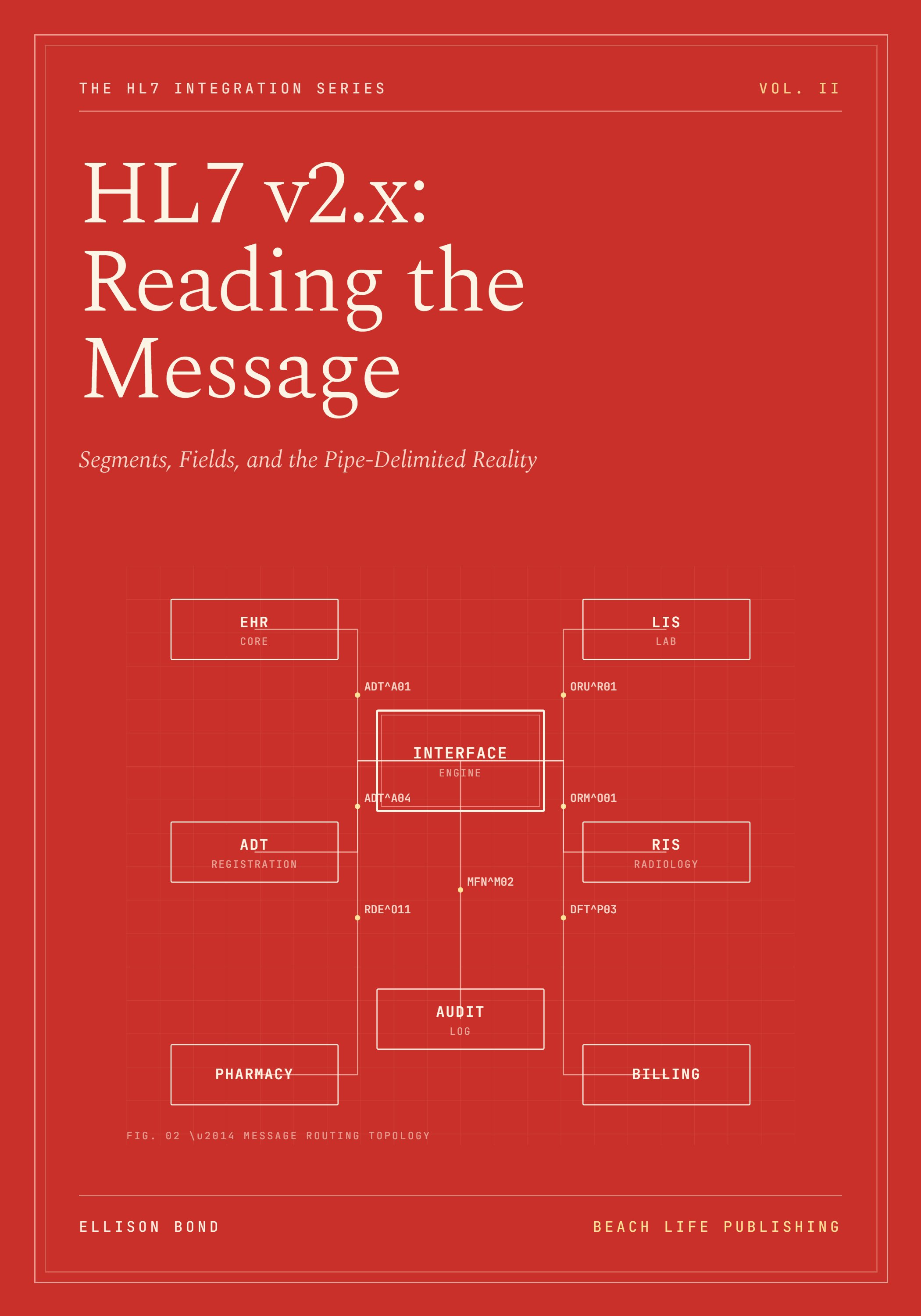
HL7 v2.x: Reading the Message — Volume II cover
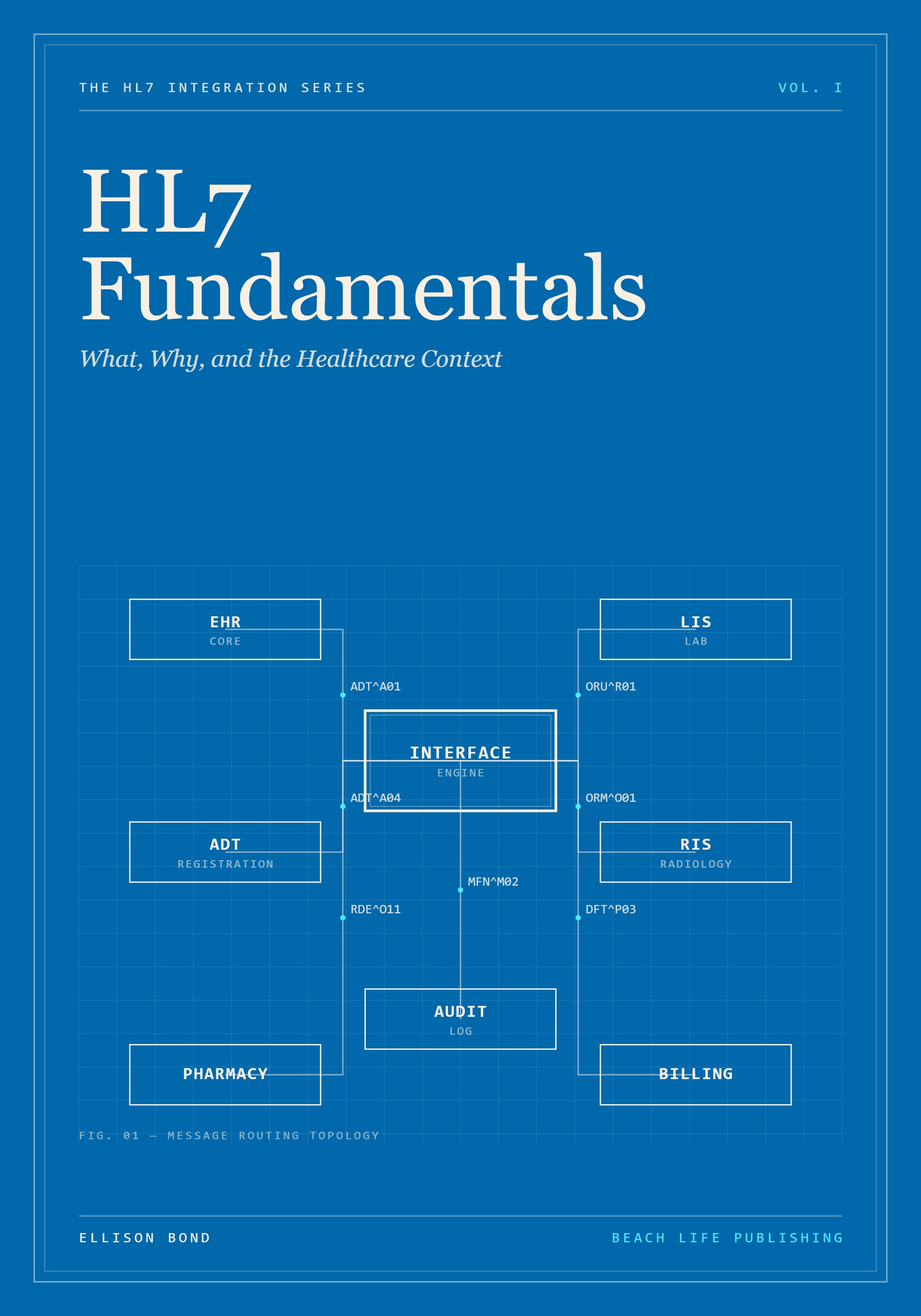
HL7 Fundamentals — Volume I cover
Vol. I available now  ·  Vols. II–V forthcoming

The HL7 books that should already exist.

HL7 is one of the worst-documented common technologies in working software. The official specifications run to thousands of pages, written for committee members rather than learners. The HL7 v2 standard alone is older than the public web; HL7 FHIR is a decade old and still missing the kind of practitioner literature that languages and frameworks of similar size take for granted. Healthcare integration engineers learn the work almost entirely on the job, from colleagues, and from forum posts — not from books.

This series is an attempt to fix that. Five books, each focused on one part of the curriculum a working integration engineer actually needs:

What HL7 is, and why healthcare needs it. The first volume covers the conceptual ground: how patient data moves between systems, what an interface engine actually does, why vocabularies are hard, how messages get acknowledged, where the project lifecycle goes wrong, and what HIPAA and security mean for someone building production integrations. No code, no v2 segments — the foundation you need before any of that makes sense.

How to read HL7 v2 fluently. Most healthcare integration work in production today is still v2: pipe-delimited messages, ADT and ORM and ORU streams, the segments and fields that have been moving patient data since the 1990s. Volume II covers every common segment in every common message family — ADT, ORM, ORU, SIU, DFT, MDM, BAR — with the deep structure of fields and components and the version-by-version differences that bite you in production.

JavaScript for the working integration engineer. The code inside Mirth Connect transformers, Iguana Translator scripts, and Rhapsody filter logic is JavaScript — but learned through HL7 examples rather than web tutorials. Volume III teaches the language at the bench: variables, control flow, regular expressions, string manipulation, dates, error handling, all from the perspective of parsing and transforming v2 messages.

Routing, transformation, and production operations. Volume IV is the working engineer's book. Routing patterns, transformation patterns, error handling and retry design, throughput tuning, monitoring at scale, CDA in detail, and the politics of vendor work. Each pattern shown in engine-neutral pseudocode and in real engine screenshots.

FHIR, the modern HL7. Volume V covers FHIR from the ground up for someone who already knows v2. Resources, references, bundles, the RESTful API, search, profiles, terminology, SMART on FHIR, and how to map between v2 and FHIR in real-world projects.

Every book centers on Beachside Regional Health, a fictional 280-bed coastal community hospital, and the integration team that keeps its forty interfaces running. The cast recurs across the series. The technical material is drawn from real production work, lightly composited and anonymized. The voice is the voice of someone who has been in the room when these problems were solved.
Five books. One curriculum.

Every volume centers on Beachside Regional Health, a fictional 280-bed coastal community hospital, and the integration team that keeps its forty interfaces running. The cast carries the lessons; the lessons are drawn from real production work.

HL7 Fundamentals cover
Book One
Available now

HL7 Fundamentals

What, Why, and the Healthcare Context

The conceptual foundation. No code. Why healthcare needs HL7, the family of standards, how patient data flows, what an integration engine does, how messages travel and get acknowledged, why vocabularies are hard, the project lifecycle, HIPAA and security, production discipline.

HL7 v2.x Reading the Message cover
Book Two
In progress · Late 2026

HL7 v2.x

Segments, Fields, and the Pipe-Delimited Reality

Picks up where Book One's anatomy chapter leaves off. Every common segment in every common message type, the deep structure of fields and components, the major message families (ADT, ORM, ORU, SIU, DFT, MDM, BAR), and the version-by-version differences that matter. By the end, you can read any v2 message fluently.

JavaScript for Integration Engineers cover
Book Three
Forthcoming

JavaScript for Integration Engineers

The Language at the Bench

Teaches JavaScript through HL7 examples. Variables, control flow, functions, regular expressions, string manipulation, dates, error handling — all learned by parsing and transforming v2 messages. The kind of code that lives inside Mirth transformers, Iguana Translator scripts, and Rhapsody filter logic.

Routing, Transformation & Production Operations cover
Book Four
Forthcoming

Routing, Transformation, and Production Operations

From the First Socket to the On-Call Runbook

Routing patterns, transformation patterns, error handling and retry design, throughput tuning, monitoring at scale, CDA in detail, and the politics of vendor work. Each pattern is shown in engine-neutral pseudocode and in real engine screenshots.

FHIR: The Modern HL7 cover
Book Five
Forthcoming

FHIR: The Modern HL7

Resources, REST, and the Next Interoperability

FHIR from the ground up for someone who already knows v2 and integration. Resources, references, bundles, the RESTful API, search, profiles, terminology, SMART on FHIR, and how to map between v2 and FHIR in the real world.

Beachside Regional cover
The World
Throughout the series

Beachside Regional Health

A fictional 280-bed coastal community hospital

Every book follows the same case study. The integration team that keeps Beachside's forty interfaces running becomes familiar across the series. The cast carries the lessons; the lessons are drawn from real production work. Readers come for the technical material and stay for the team.

Reader questions, corrections, or just hello.

Direct email reaches the author. Replies usually within a few days. Bug reports on the books especially welcome.

ellisonbond@beachlifepublishing.com